
What is a Hash?
Baking data into unique digital fingerprints - easy to make, impossible to reverse!
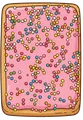
A Hash Function is a mathematical algorithm. Think of it like a strict, one-way recipe that takes an input of any size (your raw text 'dough') and bakes it into a fixed-length string of characters (a uniquely sprinkled biscuit) called the hash.
What are Hashes Used For?
- Data Integrity: When downloading a file, the provider often lists its hash. After downloading, you hash the file yourself. If the hashes match exactly, the file was not corrupted or tampered with, meaning nobody took a bite out of your data.
- Password Storage: Secure websites never store your actual password. Instead, they store the hash (the baked biscuit pattern) of your password. When you log in, the system hashes what you typed and compares the sprinkle patterns to see if they match.
- Digital Signatures: Used extensively in blockchain technologies and document signing to mathematically prove authenticity.
Key Properties of a Hash:
- Deterministic: The exact same input will always produce the exact same output.
- The Avalanche Effect: Changing even a single letter in the input completely alters the resulting hash. A tiny change to the recipe scrambles the entire sprinkle pattern, making it instantly obvious if data was modified.
- One-Way Function: It is practically impossible to reverse-engineer the hash back into the original input. You can't un-bake the biscuit!

The Cookie Thief's Dilemma: Why Hashes Can't Be Reversed
Imagine our cookie thief sneaks into the bakery vault and steals a list of hash digests (the sprinkle patterns). Can they work backward to reconstruct Bob's original secret messages or passwords?
No chance! Cryptographic hash functions like SHA-256 are strictly one-way trapdoors with no key. During hashing, the message undergoes hundreds of bitwise rotations, modular additions, and compression rounds that deliberately discard and fold information. Even with the world's most powerful computers, the thief cannot "un-bake" the biscuit; they would have to blindly guess recipes until stumbling upon an identical hash!
Common Algorithms:
When studying hashing, you'll encounter terms like SHA-256, SHA-1, and MD5. While these sound like random computer jargon, they actually tell you the specific "recipe" being used to create the hash. Here is what they actually mean:
- SHA-256 (Secure Hash Algorithm, 256-bit):
What it stands for: SHA stands for Secure Hash Algorithm. It belongs to the "SHA-2" family of recipes.
What the "256" means: It means the resulting hash is always exactly 256 bits long (represented as a 64-character string of letters and numbers). Think of it like a recipe that always places exactly 256 sprinkles on a biscuit.
Why it's used: 256 bits allows for 2256 unique sprinkle combinations, a number so unfathomably huge (78 digits long!) that it is practically impossible for two different inputs to produce the same hash. It is the current industry gold standard used for secure websites, passwords, and Bitcoin.
- SHA-1 (Secure Hash Algorithm, 160-bit):
What it stands for: An older, first-generation sibling in the SHA family that produces a smaller, 160-bit hash.
Why it is retired: Because it is smaller, modern high-powered computers have managed to find "collisions" - two completely different pieces of text that produce the exact same hash (like two different doughs baking into the same sprinkle pattern). It is no longer considered safe and has been phased out.
- MD5 (Message Digest 5):
What it stands for: MD stands for Message Digest (an older term for a hash), and this is the 5th version of that recipe. It creates a 128-bit hash.
Why it is obsolete: MD5 is completely broken. Modern computers can find collisions in less than a second. While still used today for quick, non-secure checks (like verifying if a large game download has any corrupted files), it should never be used for security or protecting passwords.
Interactive Hash Visualiser
Type a message and push the button to generate its unique hash. Because hash functions are deterministic, entering the exact same text will always produce the exact same cookie pattern and hash value. Compare the last 3 outputs to see the Avalanche Effect in action: notice how changing even one single letter completely scrambles the entire layout!
